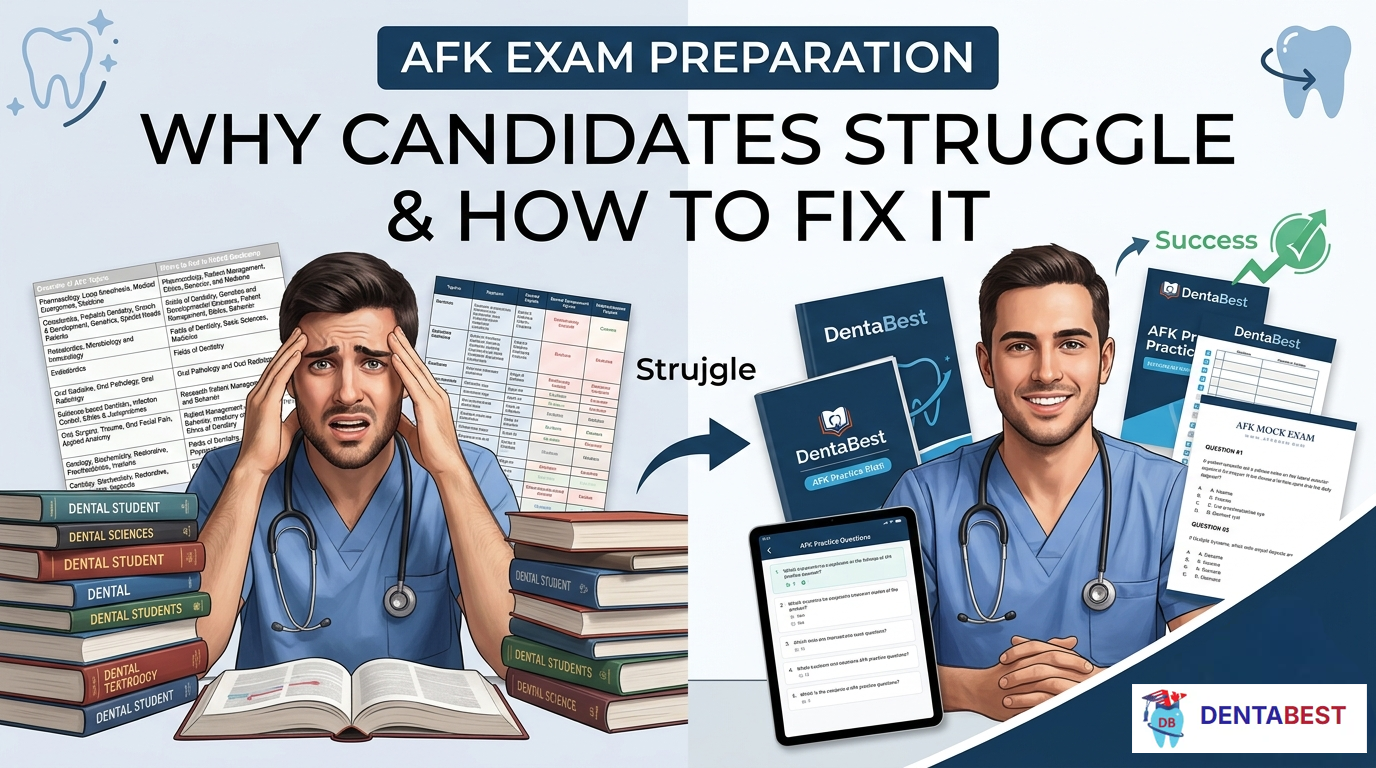
Over the years working with internationally trained dentists in Canada, I have had the same conversation many times.
A candidate comes to me after weeks or months of preparation. They have been studying consistently. They have read through textbooks, gone through notes, watched videos. And yet, when they sit a practice exam, the results do not reflect the effort they have put in.
The frustration in these conversations is real. And it is understandable.
The problem, almost always, is not the effort. It is the approach.
AFK exam preparation is a specific skill. And like any skill, doing more of the wrong thing does not make you better — it just keeps you busy.
What Makes the AFK Different From Other Dental Exams
The Assessment of Fundamental Knowledge is not a test of how good a dentist you are. I want to say that clearly, because this misunderstanding is at the root of most preparation problems I see.
Many candidates who come to me are experienced, skilled clinicians. They have treated hundreds of patients. They have strong diagnostic instincts. And they assume that this clinical competence will carry them through a knowledge-based examination.
It does not — not without preparation that specifically targets the way the AFK is designed.
The AFK tests biomedical science and applied clinical knowledge in a multiple-choice format. It expects you to think at a mechanism level — not just know what drug to use, but understand why that drug is used, what its mechanism of action is, and why alternatives are less appropriate in that specific clinical context.
That level of precision is not something clinical experience builds automatically. It is built through focused, exam-specific study.
The Most Common Preparation Mistakes I See
In my experience, the same mistakes appear again and again in AFK exam preparation.
Studying too broadly. The AFK has a defined content blueprint. Candidates who try to review all of dentistry — every textbook, every topic — end up covering enormous amounts of material that is not tested, while leaving genuine gaps in areas that are. Preparation needs to be mapped to the actual exam content areas, not to a general sense of dental comprehensiveness.
Reading without practising. Reading and understanding content is the beginning of preparation, not the end. The AFK tests your ability to apply that content under exam conditions — timed, with carefully constructed distractors designed to catch partial understanding. Candidates who read extensively but do not practise enough questions under realistic conditions are not preparing for the exam they will actually sit.
Skipping the review. This is perhaps the most costly mistake. Taking a practice question set and then simply checking which answers were right and wrong, without deeply analysing the reasoning behind each error, means throwing away most of the learning value. Every wrong answer contains information about a gap in either knowledge or reasoning. That information is only useful if you act on it.
Underestimating ethics and jurisprudence. I see this consistently. Candidates from outside Canada often spend minimal time on the ethics and jurisprudence section because it feels less scientific than the other content areas. But Canadian dental ethics has specific characteristics — standards, professional obligations, patient rights frameworks — that differ meaningfully from other countries’ systems. This section can make a significant difference to your overall result if prepared for seriously.
What Effective AFK Exam Preparation Actually Looks Like
Over many years of supporting candidates through the NDEB process, I have noticed that the candidates who do well tend to share a few consistent habits.
They start with a diagnostic. Before committing to a study plan, they honestly assess which content areas they are strong in and which ones have genuine gaps. This takes intellectual honesty, because it means sitting with uncomfortable results. But it gives the preparation a real target rather than a general direction.
They study in focused blocks, not marathon sessions. There is a ceiling to how much the brain retains in a single sitting. Two to three focused hours with genuine concentration, followed by review, is consistently more productive than six hours of diminishing attention.
They use AFK study materials that are built for the exam, not materials repurposed from other contexts. The quality of your resources directly affects the quality of your preparation.
And they do not prepare in isolation. Whether through a formal AFK online coaching programme or through regular contact with someone who knows the exam well, having an external perspective on your preparation consistently improves results.
A Word on the NDEB Timeline
One of the pressure points I see regularly is candidates who have committed to an exam date before their preparation is genuinely ready.
The AFK is available at specific exam windows. Missing a window feels costly. But sitting the exam before preparation is at the right level is almost always more costly — both in terms of the emotional weight of an unsuccessful attempt and in the delay to the rest of the Equivalency Process that it creates.
If your preparation is not where it needs to be with four to six weeks to go, consider whether rescheduling is the better decision. This is not a failure — it is a strategic choice that most successful candidates wish they had given themselves permission to make earlier.
How I Can Help
At DentaBest, I work with internationally trained dentists throughout their AFK exam preparation — from the initial diagnostic assessment through to the final weeks before the exam.
My AFK personalized programme includes scheduled sessions directly with me, a preparation plan built around your specific starting point and timeline, integrated mock exams and practice resources, and the kind of honest, ongoing feedback that self-study simply cannot provide.
If you have been preparing and feel like your results are not reflecting your effort, that is usually a sign that something in the approach needs to change — not that you are not capable of passing.
Book a free 30-minute orientation and let us look at your preparation together. Sometimes a single conversation is enough to identify exactly what needs to shift.